
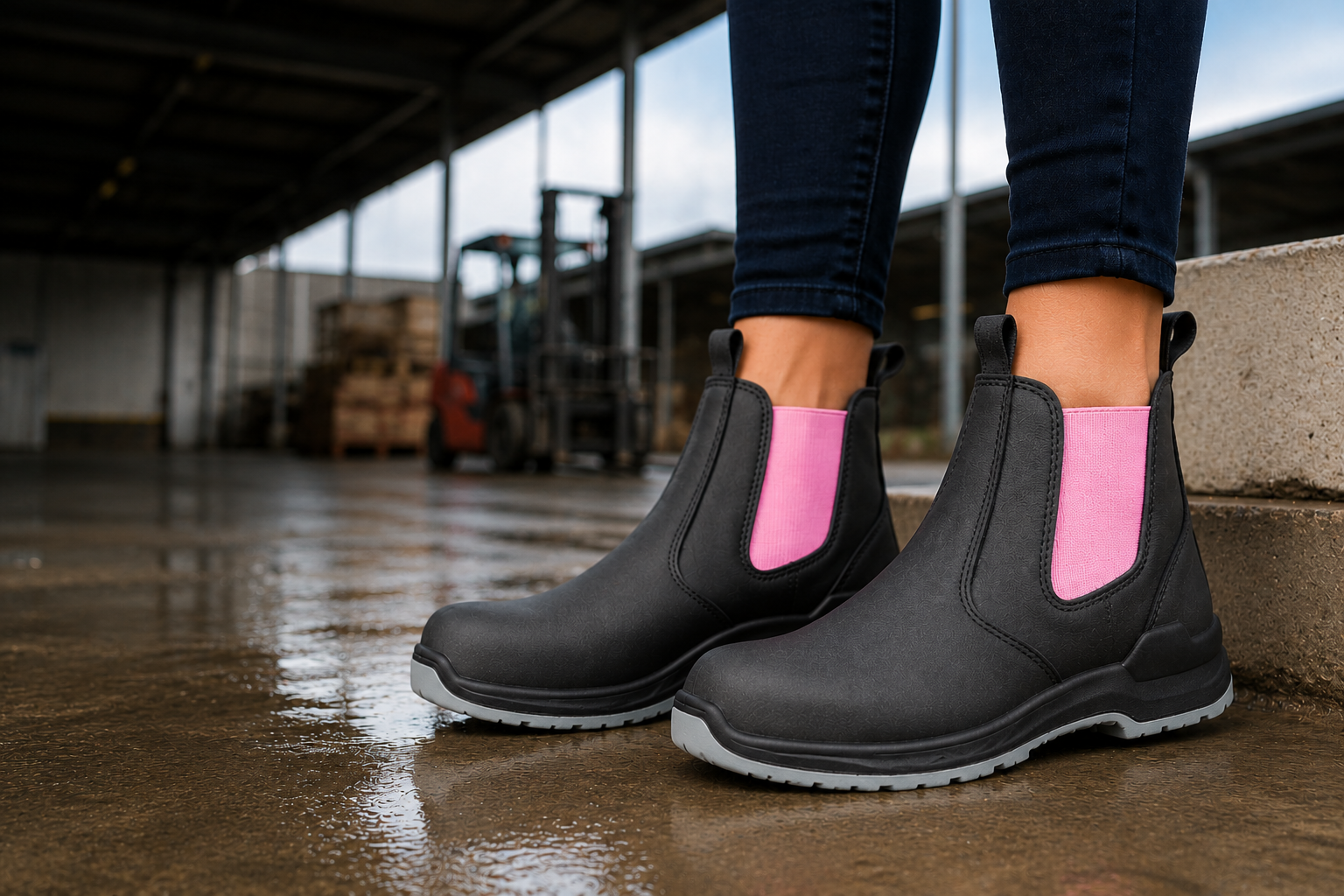
Finding the right pair of work boots can feel like an endless search, especially when you need something that looks sharp, fits properly, and still holds up to a full day on your feet. Chelsea boots have become one of the most popular choices for women who want workwear that doesn’t compromise on style or safety. Their sleek, ankle-length silhouette, elastic side panels, and pull-on design make them easy to slip on and off, while modern safety versions bring in the protective features tradespeople actually need.
Whether you’re on a construction site, in a warehouse, or working retail shifts that keep you standing for hours, choosing the right boot matters. That’s where a trusted supplier like Profit Safety Footwear comes in, offering a wide range of certified women’s work boots designed specifically for comfort, durability, and all-day protection. In this guide, we’ll break down everything you need to know about women’s Chelsea work boots, from what makes them different to how to pick the right pair for your job.
What Makes Chelsea Boots a Smart Choice for Work?
Chelsea boots have a distinct look: a low-cut ankle boot with elastic gussets on the sides and no laces or buckles. This simple design turns out to be incredibly practical for work environments. There’s nothing to catch on machinery, no laces to trip over, and no time wasted tying and untying boots multiple times a day. You simply slide them on and get moving.
For women specifically, Chelsea boots also solve a long-standing problem in the safety footwear industry: fit. Many work boots are designed on male foot templates and simply resized down, which often leaves women with boots that are too wide, too stiff, or uncomfortable around the ankle. Purpose-built women’s Chelsea work boots are shaped around a narrower heel and a more accurate arch profile, so the fit feels secure rather than sloppy.
Why Does Comfort Matter So Much in Work Boots?
If you’re on your feet for eight, ten, or twelve hours a day, comfort isn’t a luxury, it’s a necessity. Poorly fitted or unsupportive boots can lead to foot fatigue, blisters, back pain, and long-term joint issues. A well-made Chelsea work boot addresses this through several design features:
- Cushioned insoles that absorb shock with every step
- Breathable linings that reduce moisture buildup and odour
- Flexible outsoles that move naturally with your foot instead of fighting against it
- Padded collars that prevent rubbing around the ankle
Comfort also affects productivity and safety indirectly. A worker who is constantly adjusting their boots or dealing with sore feet is more likely to lose focus, and on a job site, that lapse in attention can be dangerous. Investing in boots that feel good from the first wear pays off in both performance and wellbeing.
What Safety Features Matter in Women’s Work Boots?
Comfort alone isn’t enough for most workplaces. Depending on your industry, you may be required to wear boots that meet specific safety standards. Here are the key protective features to check before buying:
Do You Need a Steel or Composite Toe Cap?
A protective toe cap is essential for anyone working around heavy tools, falling objects, or machinery. Steel toe caps offer maximum impact resistance, while composite toe caps (made from materials like fiberglass or carbon fiber) are lighter and don’t conduct heat or cold, making them a popular choice for women who want protection without the extra weight.
How Important Is Slip Resistance?
Slip-resistant outsoles are a must if you work in environments with wet floors, oil spills, or uneven terrain. Look for boots with deep tread patterns and rubber compounds specifically engineered to grip various surfaces. This feature alone can significantly reduce workplace slip-and-fall incidents.
Should You Consider Puncture-Resistant Soles?
For roles that involve walking over debris, nails, or sharp materials, a puncture-resistant midsole adds an important layer of protection. It’s a feature worth prioritizing if you work in construction, demolition, or general labour roles.
If you’re looking for a boot that brings several of these protective elements together in one stylish package, the Golden Orb is a standout option. It’s built with a durable, protective structure while keeping the classic Chelsea silhouette that makes it easy to wear both on and off the clock.
How Do You Choose the Right Fit for All-Day Wear?
Fit is arguably the most important factor when selecting work boots, because even the most protective boot becomes a liability if it doesn’t fit properly. Here’s what to keep in mind:
- Measure your feet later in the day. Feet naturally swell throughout the day, so an afternoon fitting gives you a more accurate size.
- Account for socks. If you wear thicker work socks, try boots on with the same socks you’ll be wearing on the job.
- Check the toe box. Your toes should have room to move without feeling cramped, especially important for boots with reinforced toe caps.
- Test the ankle gusset. The elastic panels should hug your ankle snugly without digging in or feeling loose.
Boots that fit well from day one typically require little to no break-in period, which means fewer blisters and a more comfortable transition into daily wear.
What to Look for in Women’s Chelsea Work Boots?
When browsing online, it helps to compare options side by side rather than settling on the first pair you find. A dedicated collection, such as the women’s work boots range, makes this easier by grouping styles specifically designed for women, so you’re not sifting through unisex or men’s sizing charts trying to guess your fit.
While shopping, pay attention to:
- The certification standards listed (such as AS/NZS 2210.3 for Australian safety footwear)
- Materials used, including leather quality and lining type
- Customer reviews mentioning long-term comfort and durability
- Warranty or return policies in case the fit isn’t right
Are Lightweight Chelsea Boots Worth Choosing for Work?
Weight matters more than many people realize. A heavy boot can slow you down and cause fatigue in your legs and lower back over a full shift. Lightweight safety boots have become increasingly popular because they deliver the same protective standards without the bulk of traditional steel-heavy designs.
If lightweight comfort is a priority for you, it’s worth reading up on how lightweight safety boots built for comfortable workwear are engineered differently from standard boots, using composite materials and streamlined soles to cut down on overall weight while maintaining certified protection levels.
How Do You Maintain and Extend the Life of Your Chelsea Work Boots?
A quality pair of work boots is an investment, so proper care matters. Here are a few simple habits that help:
- Clean them regularly. Wipe off dirt, dust, and debris after each shift to prevent material breakdown.
- Condition the leather. Leather boots benefit from occasional conditioning to prevent cracking and drying out.
- Let them air out. Avoid storing boots in damp or enclosed spaces; give them time to breathe between wears.
- Rotate pairs if possible. Alternating between two pairs of boots allows each pair to fully dry out and recover their shape.
With the right care, a well-made pair of Chelsea work boots can last several years, even under demanding daily conditions.
Final Thoughts
Choosing the right pair of women’s Chelsea work boots comes down to balancing three things: comfort, protection, and fit. A boot that ticks all three boxes will support you through long shifts, protect you from workplace hazards, and still look sharp enough to wear beyond the job site. If you’re ready to explore certified, comfortable options built specifically for women, reach out to the team through the contact page for guidance on finding the right pair for your workplace and daily needs.
Frequently Asked Questions
1.Are Chelsea boots suitable for safety-certified workplaces?
Yes, many Chelsea-style work boots are built with certified toe caps, slip-resistant soles, and puncture protection, meeting the same safety standards as traditional lace-up work boots.
2.How do I know if a Chelsea work boot fits correctly?
A properly fitted Chelsea boot should feel snug around the heel and ankle without any pinching, while allowing your toes enough room to move freely inside the toe box.
3.Can Chelsea work boots be worn in wet or slippery conditions?
Yes, as long as the boots feature a slip-resistant outsole. Check the product details for tread design and traction ratings before choosing a pair for wet or oily environments.
4.Are lightweight Chelsea boots less protective than heavier options?
Not necessarily. Many lightweight boots use composite toe caps and advanced sole materials that offer the same level of protection as steel-toe boots, just without the added bulk.
5.How often should I replace my work boots?
This depends on usage and work conditions, but most work boots should be inspected every few months for sole wear, cracking, or reduced grip, and replaced once protective features start to deteriorate.