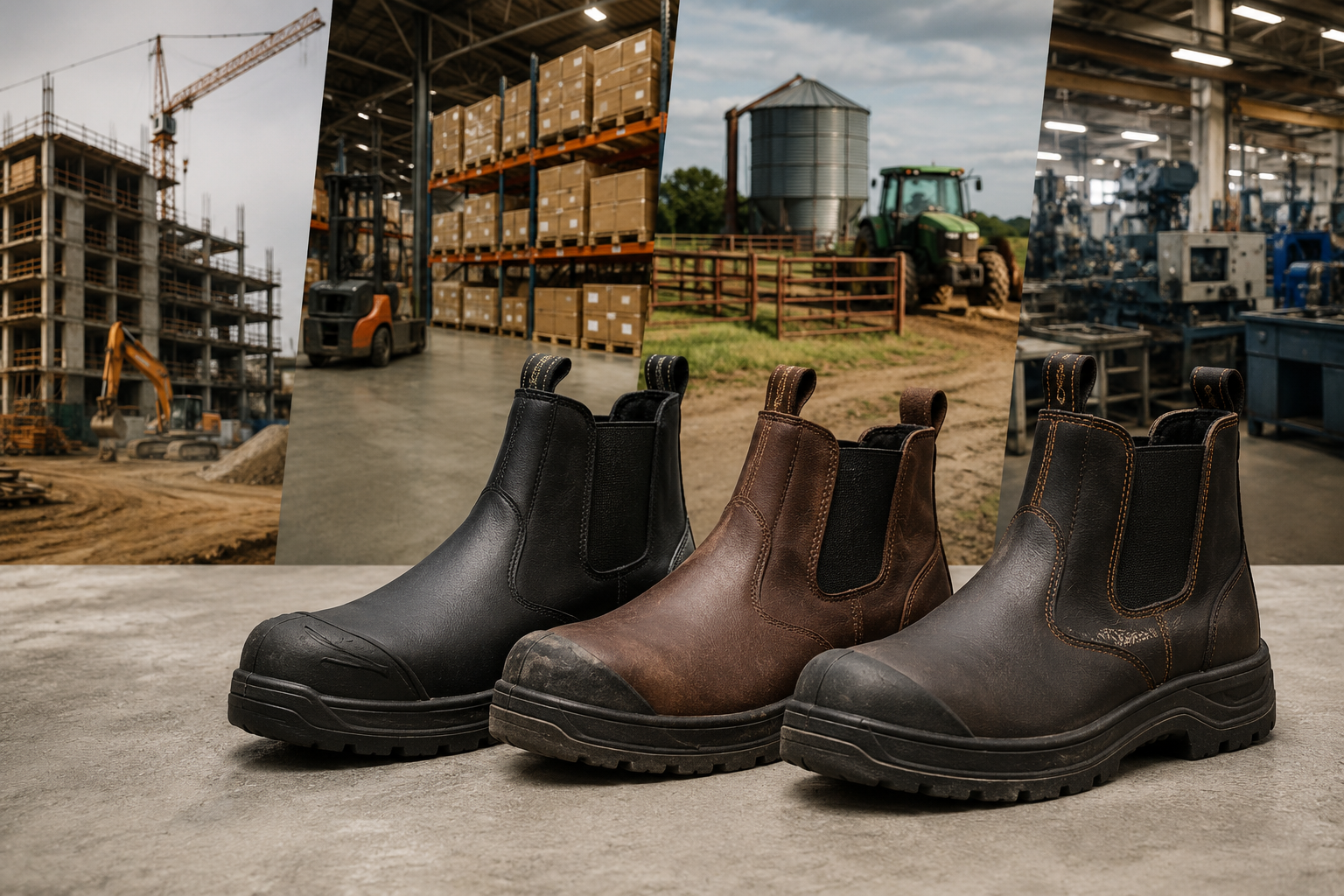
Not all work boots are created equal, and what works perfectly on a construction site might be completely unsuitable in a warehouse or a hospitality kitchen. The right pair of boots depends on the hazards you face daily, the surfaces you walk on, and how many hours you spend standing or moving. Getting this choice right isn’t just about comfort, it’s about safety, compliance, and long-term foot health.
With so many styles available, from rugged lace-up boots to sleek Chelsea boots, choosing the right pair can feel overwhelming. A trusted supplier stocks a wide range of certified options built for different industries, making it easier to match your footwear to your specific job requirements. This guide walks through exactly how to choose work boots for your industry, whether you need heavy-duty protection or lightweight, easy-to-wear designs like Chelsea boots.
Why Does the Right Work Boot Matter for Every Industry?
Work boots aren’t a one-size-fits-all purchase. Each industry comes with its own set of risks, whether that’s falling objects, slippery floors, electrical hazards, or extreme temperatures. Wearing the wrong boot for your environment increases the risk of injury and can also lead to long-term discomfort, poor posture, and fatigue.
Choosing boots suited to your specific role also affects compliance. Many workplaces require footwear that meets recognised safety standards, and failing to wear certified boots can put both employees and employers at risk during inspections or after an incident.
What Factors Should You Consider Before Buying Work Boots?
Before choosing a pair of boots, it helps to think through a few key questions about your daily work environment:
- What surfaces do you walk on most (concrete, gravel, wet floors, uneven ground)?
- Are you exposed to heavy objects, sharp debris, or moving machinery?
- Do you need electrical hazard protection?
- How many hours a day will you be wearing the boots?
- Is quick on-and-off access important, such as with Chelsea boots?
Answering these questions narrows down the type of protection, sole design, and closure style that will actually suit your job, rather than choosing based on appearance alone.
What Are the Best Work Boots for Construction and Trades?
Construction and trade work typically involve the highest level of physical risk, including falling objects, nails, uneven terrain, and heavy machinery. For these environments, look for:
Do You Need a Steel or Composite Toe Cap?
A reinforced toe cap is non-negotiable in construction. Steel toe caps provide maximum impact resistance, while composite alternatives offer similar protection with less weight and better temperature regulation.
Should Construction Boots Have Puncture-Resistant Soles?
Yes, puncture-resistant midsoles are essential for protecting against nails, screws, and sharp debris scattered across job sites. This feature significantly reduces the risk of foot injuries on active construction sites.
For those searching for reliable, certified options built specifically for demanding trades, browsing a dedicated safety boots range makes it easier to compare styles that meet Australian safety standards without sacrificing comfort.
What Work Boots Work Best for Warehouse and Logistics Roles?
Warehouse and logistics jobs involve constant walking, lifting, and navigating between forklifts, pallets, and shelving units. Comfort and slip resistance take priority here.
Why Is Slip Resistance Important in Warehouses?
Warehouse floors are often polished concrete, which can become slippery when dusty or wet. Boots with deep-tread, oil-resistant outsoles help maintain traction and reduce slip-related incidents.
Are Lightweight Boots Better for Warehouse Work?
Yes, lightweight boots reduce fatigue over long shifts spent walking or standing. Many warehouse workers also prefer Chelsea boots for their easy slip-on design, which is convenient during frequent breaks or shift changes.
Which Work Boots Suit Hospitality and Retail Environments?
Hospitality and retail workers spend long hours on hard flooring, often dealing with spills, grease, and fast-paced movement between tasks. Here, the priority shifts slightly toward comfort and slip resistance rather than heavy impact protection.
What Should You Look for in Hospitality Work Boots?
Look for oil and water-resistant outsoles, cushioned insoles, and breathable linings. Since heavy toe protection usually isn’t required, many workers in this space choose lighter styles, including Chelsea boots, for their sleek look and easy wearability during long shifts.
Why Are Chelsea Boots Popular in Fast-Paced Environments?
Chelsea boots offer a practical advantage in busy environments: no laces to catch, no buckles to fumble with, and a design that transitions easily from the back-of-house to customer-facing areas without looking out of place.
What Should Office and Light Industrial Workers Look For?
Not every job requires heavy-duty protection. Office-based roles that occasionally involve site visits, or light industrial settings with minimal hazard exposure, often benefit from a more versatile boot.
Can You Wear Chelsea Boots for Light Industrial Work?
In many cases, yes. Chelsea boots strike a balance between professional appearance and functional support, making them a popular choice for supervisors, inspectors, or anyone who moves between office settings and light job-site visits throughout the day.
To understand more about the company supplying certified, industry-specific footwear across various sectors, it’s worth learning more about the business and its approach to combining safety compliance with everyday comfort.
How Do Climate and Location Affect Your Work Boot Choice?
Where you work matters just as much as what you do. Hot, humid climates call for breathable materials and moisture-wicking linings, while colder environments require insulated boots that retain heat without sacrificing mobility. Workers in regions with unpredictable weather often benefit from boots that are both water-resistant and well-ventilated.
For workers based in specific regions, resources like this guide on choosing the best safety boots in Victoria, Australia can offer more localised insight into selecting boots suited to regional climate conditions and industry demands.
How Do You Ensure the Right Fit Across Any Industry?
Regardless of your industry, fit remains one of the most important factors in choosing work boots. A few tips to keep in mind:
- Measure your feet later in the day, when they’re naturally slightly swollen.
- Try boots on with the socks you’ll actually wear at work.
- Ensure enough room in the toe box, especially with reinforced toe caps.
- Check that ankle support feels secure without being restrictive.
A well-fitted boot reduces the likelihood of blisters, joint strain, and long-term foot problems, no matter which industry you work in.
How Often Should Work Boots Be Replaced?
Work boots don’t last forever, and wearing worn-out boots can compromise both comfort and safety. As a general guide, boots should be inspected every few months for:
- Sole wear or reduced tread depth
- Cracking in the leather or upper material
- Loss of ankle or arch support
- Damage to toe caps or protective inserts
Replacing boots as soon as these signs appear helps maintain consistent protection and comfort throughout your workday.
Final Thoughts
Choosing the right work boots for your industry comes down to understanding the specific hazards, surfaces, and demands of your daily role. From heavy-duty steel toe boots for construction to lightweight, easy-to-wear Chelsea boots for hospitality and light industrial work, the right pair should balance safety, comfort, and durability.If you’re unsure which style best suits your workplace, contact our team today and find the perfect pair of women’s work boots designed for your industry and comfort needs.
Frequently Asked Questions
1.How do I know which type of work boot suits my industry?
Consider the specific hazards of your job, such as heavy objects, slippery floors, or sharp debris, and match your boots to those risks. Construction typically needs steel or composite toe protection, while retail or hospitality roles often prioritise comfort and slip resistance.
2.Are Chelsea boots suitable for work in multiple industries?
Yes, Chelsea boots are versatile enough for warehouse, hospitality, light industrial, and supervisory roles, especially when they include safety features like reinforced toes and slip-resistant soles.
3.What is the difference between steel toe and composite toe boots?
Steel toe caps offer maximum impact resistance and are typically heavier, while composite toe caps are lighter, don’t conduct heat or cold, and still meet safety certification requirements.
4.Do all industries require certified safety boots?
Not all industries have mandatory certification requirements, but many workplaces, especially construction, warehousing, and manufacturing, do require boots that meet recognised safety standards.
5.How can I make work boots more comfortable for long shifts?
Look for boots with cushioned insoles, breathable linings, and proper arch support. Ensuring the correct size and allowing a short break-in period can also significantly improve comfort over long shifts.